You bring the vision. We build it — absurdly fast, at a price that finally makes sense.
apps · websites · ai · brand · growth — for every idea the budget kept on hold
act 01 — app development
Complex apps are our home turf.
Bookings, payments, schedules, live data, dashboards that think — the complicated builds, engineered to the last pixel and shipped in weeks, not months.
laying out the interface…
wiring live health data…
binding the workout flow…
polishing every detail…
shipping.
app development — iOS · Android · cross-platform however complex the idea — flawless detail, full function, delivered at speed
9:41●●●●
9:41●●●●
⌄Workout···
activityRunning 🏃➤ GPS Connected
00:00time
0.00 kmdistance
◔–:––pace /km
♡––heart rate
⬩0calories
lock
pause
stop
act 02 — website development
Watch a website being born.
Left: the code, typing itself. Right: a fashion label getting a store built to sell — piece by piece, in real time. And the writing doesn't stop at one: e-commerce, real estate, even playable 3D worlds. Keep scrolling.
index.html — writing…
velvet-current.com— rendering…
New ArrivalsView all →
✓ shipped.and we keep going — new business, new build, same obsession —
act 03 — ai consulting & integration
We put AI to work. Watch it run a business.
We run our own studio on systems like these — so we know exactly where they earn their keep. On the right: customer messages answering themselves, paperwork filing itself, costs falling while revenue climbs. We design it, build it, and wire it into your business.
ai consulting & integration — chatbots · workflow automation · decision tools ai production — content systems · product shots · short films
routine labor cost
−0%
baseline
avg response time
6h
customer messages
tasks automated
0
per day, every day
customer conversations — handled while you sleep
Yui
AI
Marco
AI
the back office — running itself
invoices № 2842–2867
filed ✓
supplier order — flour, 40kg
sent ✓
weekly payroll summary
done ✓
34 customer emails
answered ✓
costrevenue
act 04 — brand development
One name becomes a whole brand.
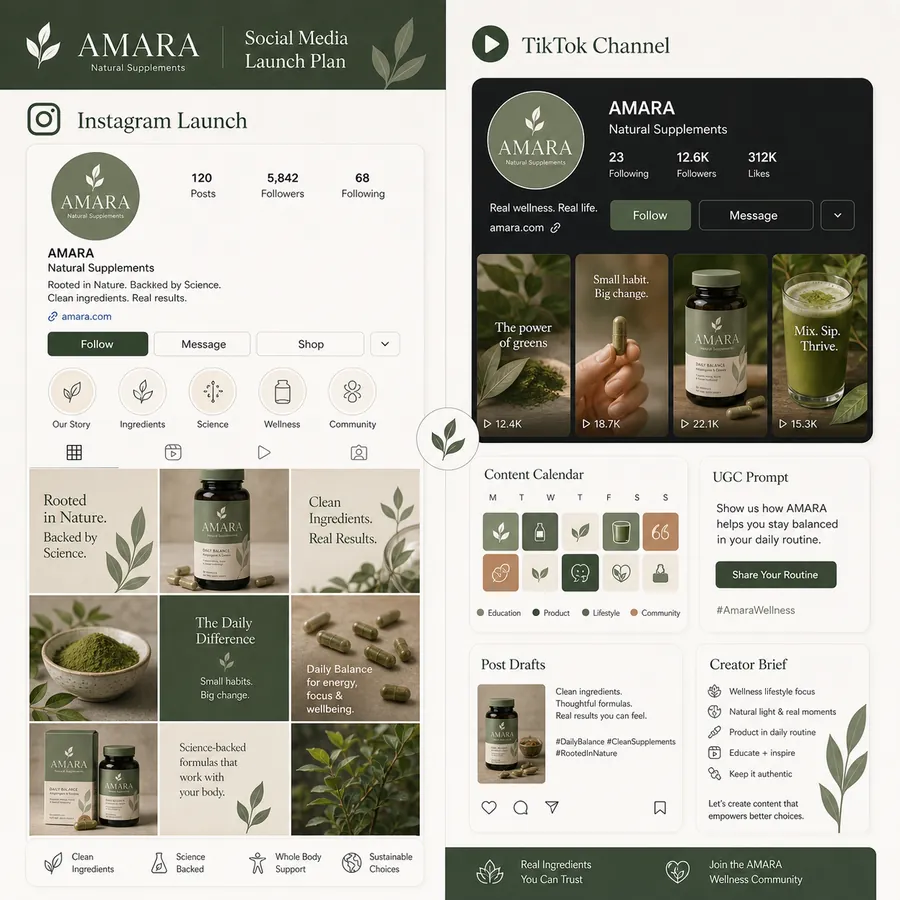
Fashion, supplements, cosmetics — if you've been carrying the dream of your own label, this is exactly what we do. A team that's spent years building brands takes you end to end. And notice, as this one assembles: a brand isn't a logo. It's an operating system.
brand development — naming · identity · brand OS packaging · art direction · launch — consistency that moves people, built to last
building brand os
one brand, end to end — identity, packaging, a site people feel, the social launch, real customer buzz, and the sales curve it all earns.
act 05 — marketing & social
Then we make it spread.
One customer tells two — and the algorithm tells ten thousand. SEO and AI search, every social channel, ads and the creatives that fuel them, landing pages, content plans, competitor research: one engine with a single job — making yours the thing people buy. Keep scrolling and watch it compound.
monthly revenue
$0
launch
content views
0
this month
engagements
0
likes · shares · saves
people reached1
word of mouth · keep scrolling
marketing · seo · ai search (aio) · ads · creatives · landing pages — social media · channels & content systems that compound
act 06 — the price disruption
Top-tier work. An invoice that makes no sense — to them.
Modern tools let a few brilliant people outbuild a crowded agency — yet the industry still bills like it's 2015: $2,000 for a template site, five months and tens of thousands for an app, slowness sold back to you as thoroughness. Expensive stopped meaning good a long time ago. We're a small senior team — engineers, designers, strategists — and we exist for everyone who had the vision but kept getting quoted out of it. Watch both yards work:
cascade alliance — a few masters · real machines
the old industry — a crowd · billing by the hour
week 1
month 1
$
$
✓ delivered — week 6 · built to stand for years
cascade alliance
price$
first demo~2 weeks
who builds itseniors only — with machines
typical agency
price$$$$
timeline5–9 months
who builds itjuniors, billed as seniors
design × engineering × AIremote · worldwideno juniors on your invoice
price disruption — never a quality compromise · your idea, finally at a quote you can say yes to
final act — your turn
All you need is a vision.
Say it the way you'd say it to a friend — "I want people to book me from their phone." That's enough. The engine sketches the plan; humans make it real.
for people in a hurry — the entire company on one screen
what we do
App developmentiOS & Android products, from first sketch to the app stores.
Website developmentFast, beautiful sites built to convert and be found.
AI consulting & integrationCopilots, automation and decision tools that actually pay off.
Brand developmentNaming, identity and a brand system people remember.
MarketingLaunches, campaigns and content that stick in people's minds.
Social mediaChannel systems that keep working after we leave.
who we are
Cascade Alliance is a senior product studio for small and medium-sized businesses. We build, launch, and grow digital products and systems — and instead of telling you we're good at it, we built this website to prove it. Everything you saw (the self-assembling app, the website born from code, the in-page AI, the live brand machine) was demonstrated, not described.
notes from the studio — building, pricing, shipping
Why I Became Independent
founder's note · jun 8, 2026
After many years at development companies, building mobile apps, websites, and digital products for all kinds of clients, I decided to go independent. It wasn't a sudden break from the industry. It was the result of watching the same problem repeat itself for too long: too many companies are asked to pay premium prices for work that is slow, unclear, and not nearly as good as it should be.
I have always loved building. I also spend a great deal of time working with the newest AI tools, not as a trend or a marketing phrase, but as part of my daily process. The more I used them seriously, the more obvious it became that the structure of digital production is changing. A small number of highly skilled people, using the right tools with discipline, can now produce work that is faster, cleaner, and often better than what large teams used to deliver.
That realization changed my sense of responsibility. If technology now allows excellent work to be delivered more efficiently, then quality digital products should not remain out of reach for founders, local businesses, creators, clinics, salons, schools, and small teams. A beautiful website, a useful app, or a practical AI workflow should not be a luxury reserved only for companies with huge budgets.
My goal is to challenge the old pricing structure of this industry. I do not want to make cheap things that look cheap. I want to make strong, thoughtful, modern things at prices that make sense. Independence gives me the freedom to work directly, move quickly, choose the best tools for each project, and stay close to the people I am building for.
This company exists because I believe the future of development should be more honest. Better tools should lead to better outcomes, not just bigger margins. Clients should feel that their budget is going into real thinking, real craft, and real progress. That is the kind of work I want to do now.
The Role of Developers in the Age of AI
perspective · jun 9, 2026
AI has changed how software development feels. Tasks that once required a specialist can now be attempted by almost anyone. A simple website, a prototype app, a landing page, a spreadsheet automation, or a chatbot can be created much faster than before. This is exciting, but it also raises an uncomfortable question for developers: if many people can now make something that looks acceptable, what is the real value of a developer?
I think about this often. My answer is not that developers are still valuable because AI is weak. That answer will become less true every year. The stronger answer is that development is not only about producing code. It is about deciding what should be built, what should not be built, how systems connect, where risks are hidden, how quality is maintained, and how a product can grow without collapsing under its own shortcuts.
AI can create a decent result when the direction is simple. But real projects are rarely simple. A business has operations, users, edge cases, tools, data, deadlines, budgets, and future plans. The role of a developer is to turn that messy reality into a system that works. That requires technical knowledge, but it also requires judgment built from experience.
Good developers know how to choose between options. They know when to use a no-code tool, when to write custom code, when to connect APIs, when to simplify a feature, and when a shortcut will become expensive later. They can use AI to move faster, but they are not controlled by it. They guide it.
In this sense, AI does not remove the need for developers. It removes the excuse for developers to be passive. The value is shifting from typing every line by hand to designing the right path, reviewing output with precision, and making strong decisions quickly. The developer who understands both fundamentals and modern AI tools can often build better products at lower cost than a larger team working in an older way.
That is where I believe our role is going. We are not here to protect the old process. We are here to build better ones.
The Impact of the Right AI Adoption
ai in practice · jun 10, 2026
The most surprising thing about adopting AI properly is not only speed. Speed is obvious. Everyone expects AI to help a team write faster, research faster, summarize faster, or generate drafts faster. What surprised me more is quality. With the right people and the right workflow, a small team can now create work that is not merely faster than before, but better.
In the past, I worked around teams of more than thirty people. Large teams can be powerful, but they also carry overhead: meetings, handoffs, unclear ownership, repeated explanations, slow reviews, and decisions that crawl through too many layers. Today, our team is much smaller, yet the amount of work we can handle is greater. More importantly, the individual quality of each deliverable is higher.
That does not happen automatically. AI is not magic. If a team uses it casually, the result can become generic or unstable. The real impact comes from designing the workflow around it. We use AI to explore ideas, generate options, review details, test assumptions, draft code, refine copy, and accelerate research. But human judgment remains at the center. We decide the direction, inspect the output, and keep raising the standard.
The best AI adoption feels like giving every skilled person a larger working surface. One person can think through design, implementation, content, and operations with far less friction. Problems that used to require waiting for another specialist can now be explored immediately. This makes the whole process more fluid.
For clients, the benefit is clear. Projects can move faster without feeling rushed. Budgets can be used more directly on quality instead of coordination overhead. Ideas can be tested earlier. Details can be improved more often. And because the team is small, communication stays close and personal.
The important point is not to replace people with AI. It is to remove the waste around good people. When talented people use powerful tools carefully, the result can feel almost unfair compared with the old way of working. That is the standard we are building toward.
Japanese Attention to Detail
craft · jun 11, 2026
One of the values we care about most is attention to detail. As a Japanese-led team, we believe that small details are not small at all. They shape trust. They change how a product feels. They decide whether a client senses that the work was simply completed, or carefully made.
In digital work, compromise often hides in places that are easy to ignore: a button that is slightly misaligned, a mobile layout that feels cramped, copy that sounds generic, a loading state that was never considered, an admin screen that works but feels unpleasant, or a feature that solves the requirement without really helping the user. No single one of these will sink a project on its own, but together they add up to the difference between ordinary work and work that feels alive.
Our approach is to move quickly without becoming careless. We want clients to feel momentum. We want ideas to become visible early. We want decisions to be made without unnecessary delay. But speed should not be used as an excuse to abandon craft. The best work takes both: fast movement and strict standards.
This is why we stay close to the client. We listen carefully to what they are trying to achieve, not only what they ask us to build. We look for the practical result behind the feature request. We ask how the product will be used, who will maintain it, what kind of impression it should leave, and which details will matter most to the people on the other side of the screen.
We also genuinely enjoy the work. That matters. When a team has real passion for building, the extra care does not feel like a burden. It becomes part of the pleasure. We want the interface to feel better, the flow to become clearer, the words to land more naturally, and the final product to make the client proud.
Our standard is simple: take the good parts of everything. Be fast, but not rough. Be affordable, but not cheap in spirit. Use AI, but do not become generic. Stay practical, but keep taste. Care about the business outcome, and care about the last pixel. That is the kind of detail we believe in.
Selected work
selected builds — real scope, timeline and budget on every one
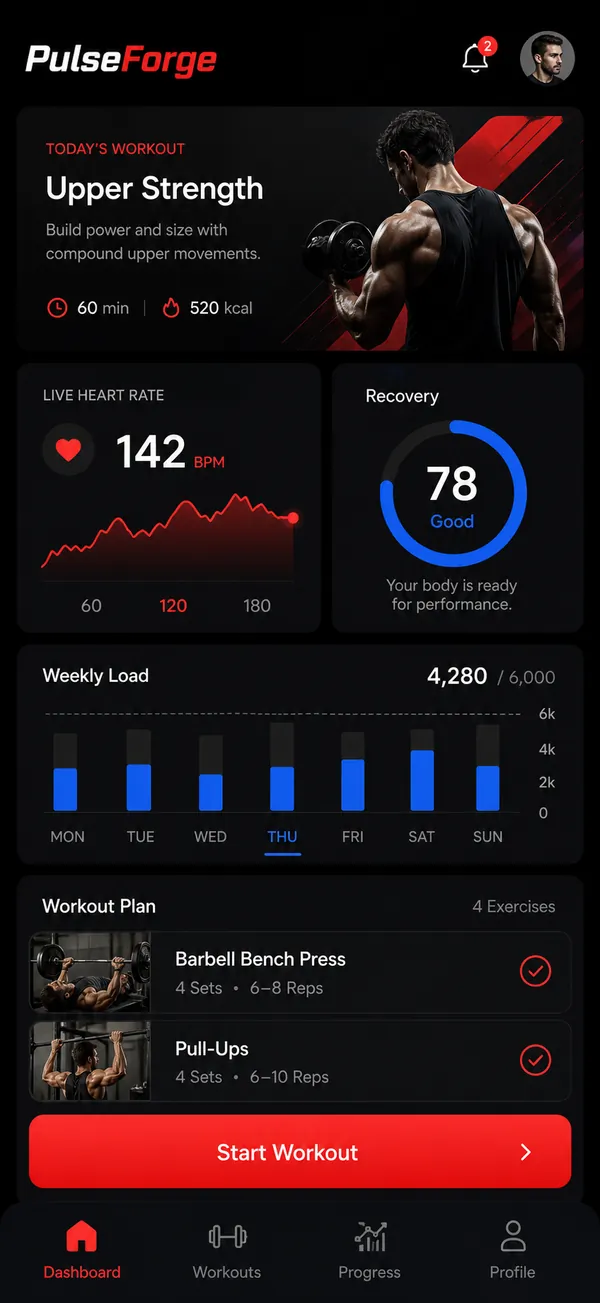
Training & fitness app
iOS · Android app
Timeline10 days
Investment$1,080
CategoryFitness
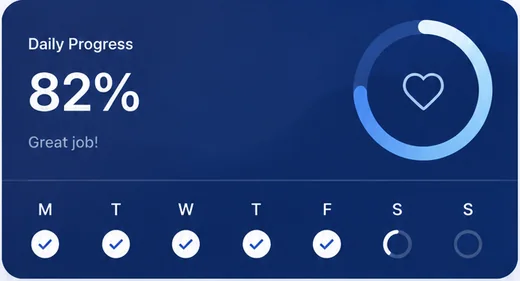
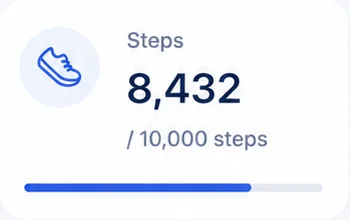
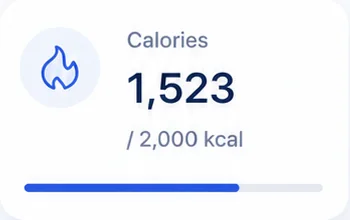
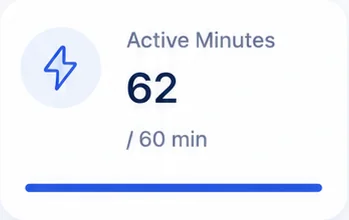
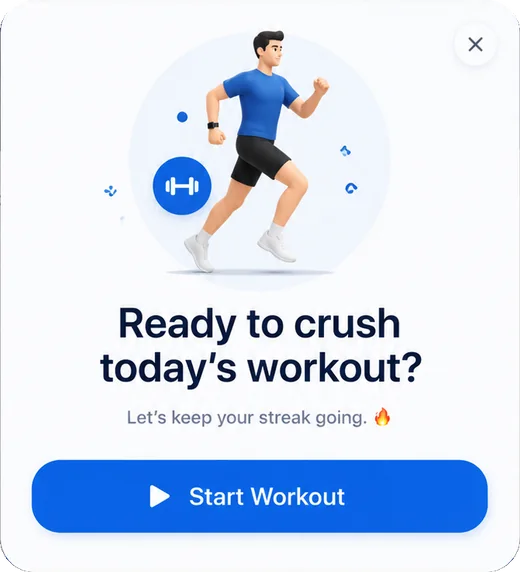
A premium training app for people who want structured workouts without a complicated setup. Daily guidance, live heart rate and calories, a weekly load chart, and a recovery score that tells you when to push.
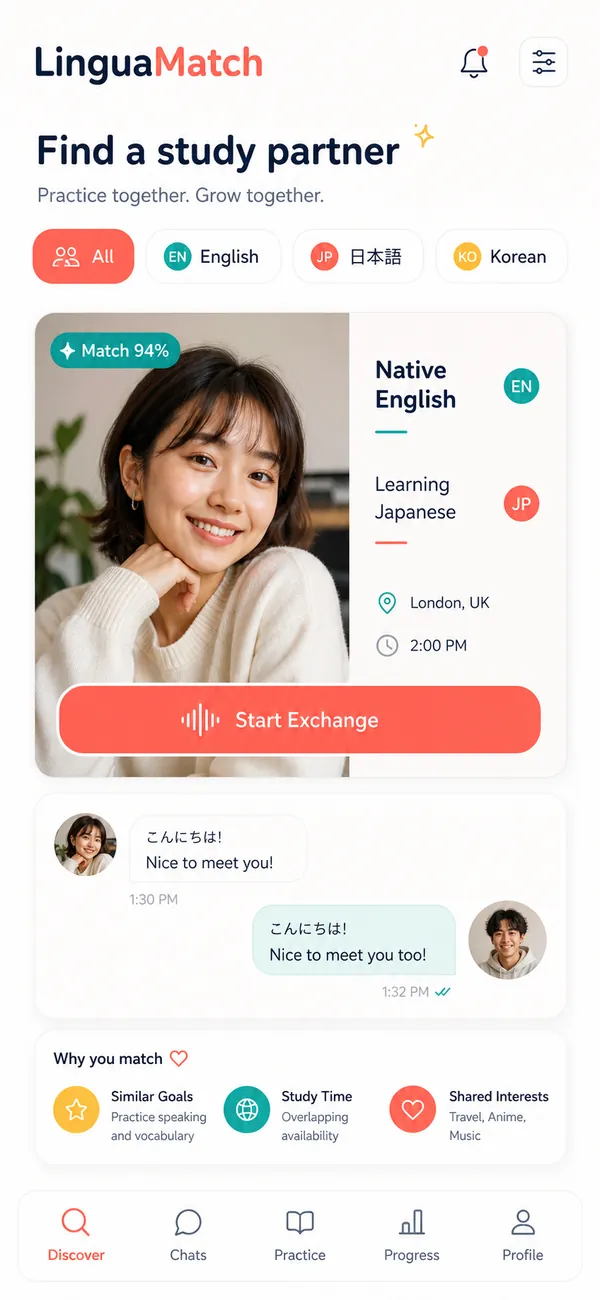
A social learning app that pairs you with compatible study partners for conversation practice. Language profiles, match scores and a voice-exchange entry point keep the first hello low-friction.
Partner discovery · native / target language tags · match score · chat preview with conversation starters · light onboarding.
Salon membership & booking app
iOS · Android app
Timeline11 days
Investment$1,300
CategorySalon membership
A membership app for a premium massage salon — bookings, treatments and loyalty wrapped in a polished member experience that keeps regulars feeling connected.
Member home · upcoming reservation card · treatment menu · therapist selection · loyalty levels · calendar booking.
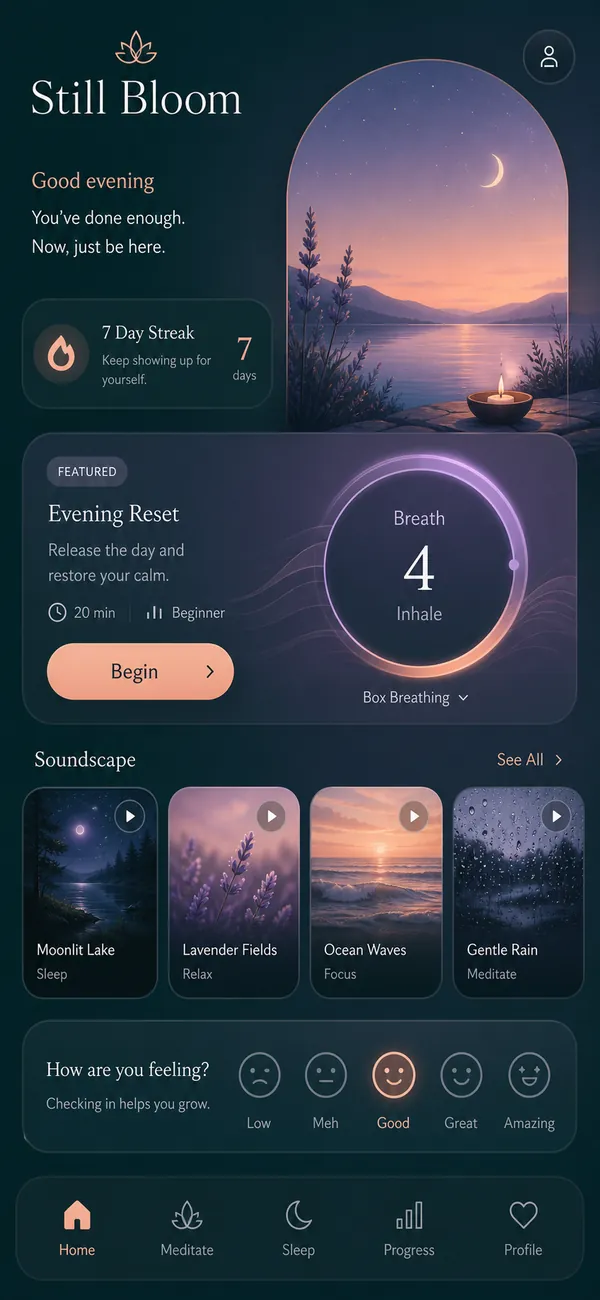
Meditation app
iOS · Android app
Timeline9 days
Investment$860
CategoryMeditation
A calm meditation app for a simple daily reset, centered on breathing, soundscapes and short sessions that build consistency gently.
A futuristic mobile game built around speed, timing and route discovery — strong motion, power-ups and competitive scoring on a playable-feeling stage screen.
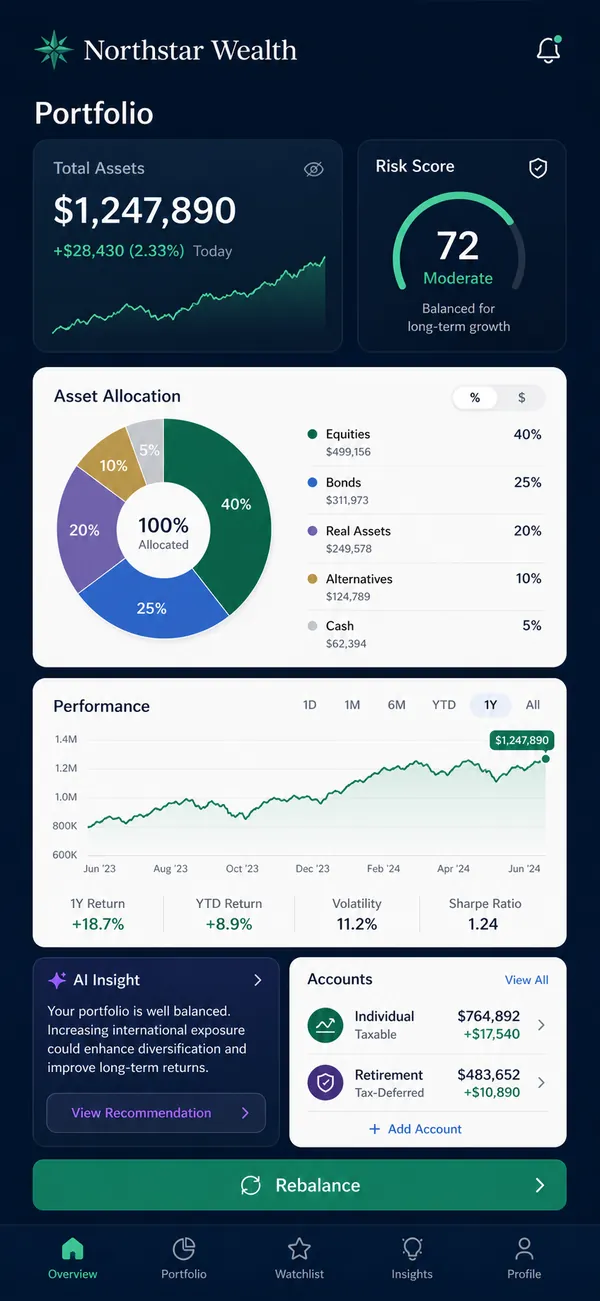
A portfolio management app that presents assets, risk and performance in a calm, approachable way — clarity first, jargon last.
Total assets summary · allocation chart · performance graph · risk score · AI insight panel · one-tap rebalance.
Fashion e-commerce website
website
Timeline11 days
Investment$860
CategoryFashion e-commerce
An editorial fashion e-commerce build: the restraint of a luxury magazine with the clarity of a conversion-focused store. Crisp monochrome with electric lime, confident type — and a buying path that stays simple.
A refined real-estate site that feels like a private advisory rather than a listing directory — generous photography, editorial property summaries and a search panel that feels polished, not transactional.
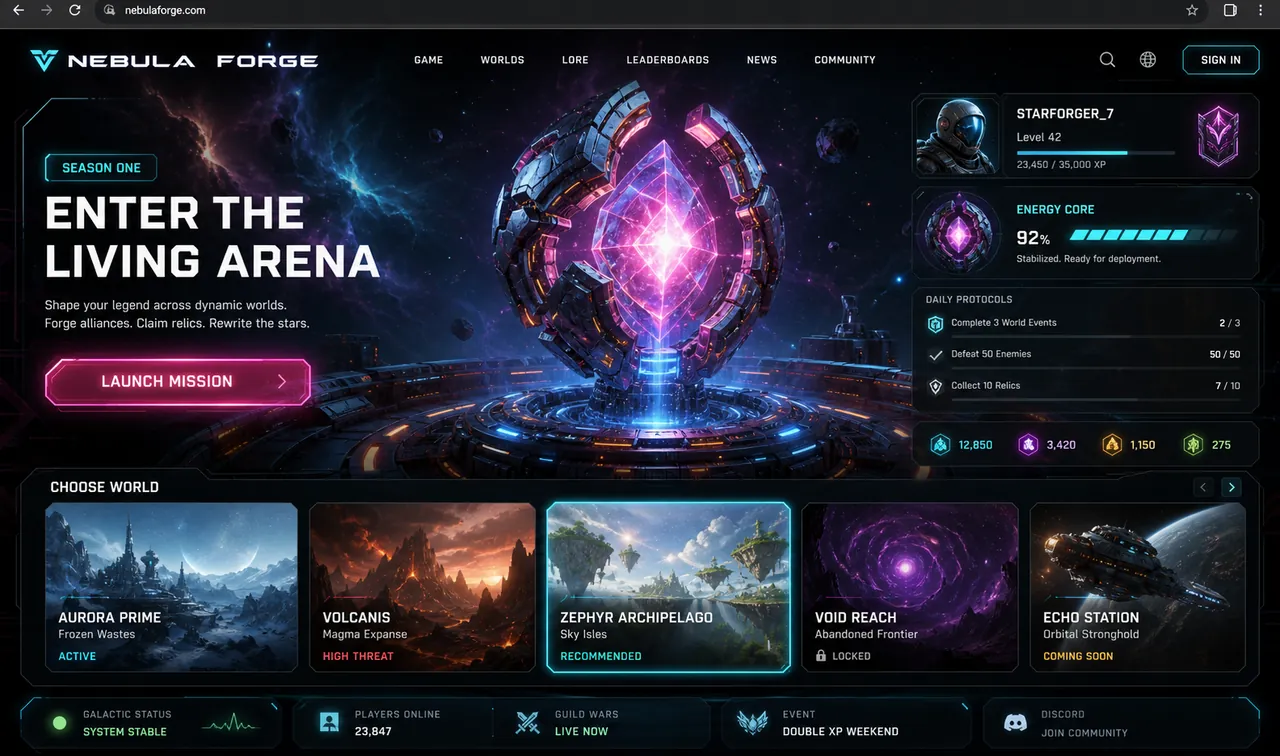
A speculative web experience built like a playable command deck — a central 3D artifact, energy panels, player stats and a cinematic call to action. Immersive, but still legible enough for real product messaging.
World selection · live player stats · launch CTA · WebGL-style motion design · high-impact campaign layout.
Legal
company details, privacy, cookies & terms — for Cascade Alliance sp. z o.o.
Prepared from EU (e-Commerce Directive 2000/31/EC, GDPR, ePrivacy) and Polish (KSH, RODO) requirements. Please have a lawyer review these before relying on them.
Company details
imprint · provider identification
This website is operated by:
Cascade Alliance sp. z o.o.
Registered office — ul. Stefana Batorego 18/108, 02-591 Warszawa, Poland
Registry — District Court for the Capital City of Warsaw (Sąd Rejonowy dla m. st. Warszawy), National Court Register
KRS 0001170168
NIP / EU VAT PL7011257404
REGON 54157014100000
Share capital 625,000 PLN, paid in full
Represented by — Sho Ito
Email — contact@cascade-alliance.com
Worldwide, remote
These details are published in line with Article 5 of the EU e-Commerce Directive (2000/31/EC) and Article 206 of the Polish Commercial Companies Code (Kodeks spółek handlowych), which require a sp. z o.o. to state its name, registered office, registry court and KRS number, NIP, REGON and share capital.
Privacy Policy
RODO / GDPR · effective 11 June 2026
Controller. Cascade Alliance sp. z o.o., ul. Stefana Batorego 18/108, 02-591 Warszawa, Poland. For any privacy matter, contact contact@cascade-alliance.com. We have not appointed a Data Protection Officer; any request you make reaches us directly.
What we collect, and why. This is a static website that, by design, collects as little as possible.
• Contact form & email. If you write to us, we process the name, email address and message you provide, solely to read and reply to your enquiry. Legal basis: Art. 6(1)(b) GDPR (steps taken at your request before any contract) and Art. 6(1)(f) (our legitimate interest in responding).
• No analytics, advertising or tracking. We set no such cookies and run no third-party trackers.
• Language preference. Your chosen language is stored locally in your browser and is never transmitted to us.
Recipients. Messages are delivered through our form provider (FormSubmit, formsubmit.co) and our email provider (Google Workspace). These providers process the data only to deliver your message and may store it outside the European Economic Area; where they do, transfers rely on appropriate safeguards such as the European Commission's Standard Contractual Clauses or an adequacy decision.
Retention. We keep enquiry correspondence only as long as needed to handle your request and to keep reasonable business records, then delete it.
Your rights. Under the GDPR you may request access to, rectification or erasure of your data, restriction of or objection to processing, and data portability, and you may withdraw consent at any time. Write to contact@cascade-alliance.com.
Complaints. You may lodge a complaint with the Polish supervisory authority — the President of the Personal Data Protection Office (Prezes Urzędu Ochrony Danych Osobowych, UODO), ul. Stawki 2, 00-193 Warszawa — at uodo.gov.pl.
No automated decision-making. We do not make decisions about you by automated means or profile you.
Cookie Policy
ePrivacy · effective 11 June 2026
The short version: this site uses no tracking, analytics or advertising cookies.
The only thing we store on your device is a single entry in your browser's local storage that remembers your language choice (English or 日本語). It is strictly functional, stays on your device, and is never used to identify or track you.
Because nothing non-essential is stored, no consent banner is required under the EU ePrivacy Directive and the guidance of the Polish authority (UODO).
The animation libraries this site uses (Three.js, GSAP) are embedded directly in the page, so there are no external requests and no third-party cookies. Clearing your browser's storage removes the saved language preference.
Terms of Use
regulamin · effective 11 June 2026
1. Scope. These terms govern your use of this website, operated by Cascade Alliance sp. z o.o. The site is informational; it does not sell goods or services online.
2. Intellectual property. The site — its code, text, design and animations — belongs to Cascade Alliance sp. z o.o. and may not be copied or reused without our written permission. The embedded open-source libraries (Three.js, MIT; GSAP, GreenSock standard license) remain under their own licenses.
3. Engagements. Nothing on this site is an offer or a contract. Any project we take on is governed by a separate written agreement covering scope, price and timeline.
4. No warranty & liability. The site is provided "as is", without warranty. To the extent permitted by law, we are not liable for indirect or consequential damages arising from its use. Nothing here limits liability that cannot be limited under mandatory law.
5. Governing law. These terms are governed by Polish law. Disputes fall to the courts competent for our registered seat, without prejudice to any mandatory consumer protections you may enjoy.